

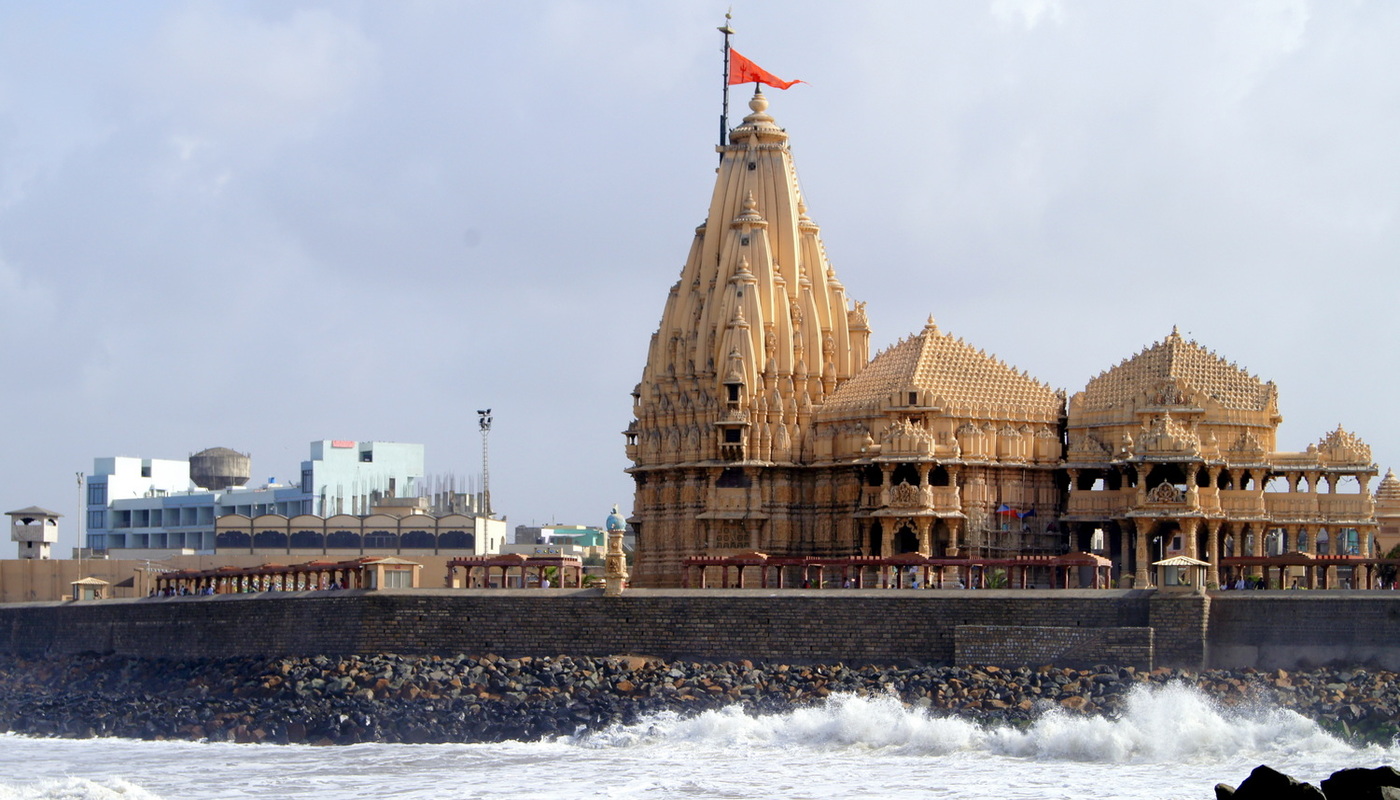

Shree Somnath Temple is not just a religious monument — it is a living symbol of India’s spiritual roots, resilience, and ancient wisdom. Standing majestically on the shores of the Arabian Sea, it represents the point where mythology, history, architecture, and devotion come together in perfect harmony.
This rewritten version presents Somnath’s story in a cleaner, compelling, and more narrative-rich form.
1. Spiritual Importance: The First Light of Shiva
Shree Somnath is revered as the Adi Jyotirlinga, the first and oldest among the twelve Jyotirlingas of Lord Shiva. For millions of devotees, this makes it one of the holiest sites in India.
What Makes a Jyotirlinga So Sacred?
A Jyotirlinga is believed to be:
- A manifestation of Shiva’s infinite cosmic light
- A sacred point where divine energy descended onto Earth
- A source of spiritual purity, protection, and liberation
Visiting Somnath is considered equivalent to receiving Shiva’s blessings at the very origin of his cosmic radiance.
2. The Legend of Chandra – Where Somnath’s Journey Began
Somnath’s sanctity deepens with the beloved legend of the Moon God, Chandra. According to mythology:
- Chandra was cursed by Daksha Prajapati, resulting in the loss of his brilliance.
- Seeking relief, Chandra performed intense penance at this very location.
- Moved by his devotion, Lord Shiva appeared as a pillar of divine light and restored the Moon’s radiance.
This event not only lifted Chandra’s curse but also established Somnath as the first Jyotirlinga, the Lord of the Moon.
3. Ancient Roots & Mythical Legacy of Somnath
Somnath stands in Prabhas Patan, one of India’s oldest sacred landscapes. The region is mentioned in:
- Rigveda
- Shiva Purana
- Skanda Purana
- Bhagavata Purana
- Early travel records and tirtha mahatmyas
This makes Somnath one of the oldest continuously visited pilgrimage centers in Indian civilization.
Key Mythological Associations Prabhas Patan is believed to be the setting for:
- The final chapter of the Mahabharata
- Lord Krishna’s departure from Earth
- Several divine episodes involving gods, sages, and celestial beings
It’s not just a temple — it is a cradle of India’s sacred narratives.
4. A Saga of Destruction & Rebirth:
Somnath’s Indestructible Faith
Few temples in the world carry a history as dramatic as Somnath.
Destroyed and Rebuilt — Again and Again
Across over 1,000 years, Somnath faced:
- Repeated invasions
- Multiple episodes of destruction
- Looting of its treasures
- Political upheavals
Yet every time, the temple rose again — rebuilt by courageous kings, devotees, saints, and communities.
Post-Independence Reconstruction The temple you see today stands as a tribute to modern India’s spiritual revival, reconstructed in 1951 under the vision of:
- Sardar Vallabhbhai Patel
- With support from Dr. Rajendra Prasad
- Architectural guidance by K.M. Munshi
Somnath’s resurrection is a national symbol of unbroken faith and cultural pride.
5. Architectural Splendor & Stunning Coastal Setting
Somnath is celebrated not just for its spiritual aura but also for its breathtaking architecture and scenic charm.
Maru-Gurjara (Solanki) Style The temple features:
• A towering, intricately carved shikhara
• Delicate sculptures depicting gods and nature
• A majestic golden kalash atop the spire
• Traditional carvings reflecting cosmic symbolism
Built according to Shilpa Shastra and Vastu Shastra, it reflects ancient Indian temple craftsmanship at its finest. A Sea-Facing Temple Like No Other Located on Gujarat’s western coast, Somnath overlooks the vast Arabian Sea. Visitors experience:
- Soothing sea winds
- Powerful crashing waves
- Beautiful sunrise and sunset views
- A naturally meditative environment
It’s one of the few temples in India blessed with such dramatic natural surroundings.
6. Inside the Temple: Rituals, Aartis & Divine Experiences
A visit to Somnath is immersive, peaceful, and spiritually uplifting.
Garbhagriha (Sanctum) At its heart lies the Somnath Jyotirlinga, radiating an aura of calm and sacred energy.
Signature Rituals
• Abhishek Puja with milk, water, honey, yogurt, and herbs
• Rudrabhishek for protection, prosperity, and spiritual cleansing
• Aarti three times daily (morning, noon, evening)
The evening aarti, accompanied by the sound of waves, is especially mesmerizing. Sound & Light Show The “Veer Darshan” show narrates:
- The temple’s history
- Mythological tales
- Its destruction and rebirth
A must-watch cultural highlight.
7. Best Time to Visit & Traveler Tips
Best Season:
October to March — pleasant weather, ideal for coastal walks and temple visits.
Dress Code & Etiquette:
• Wear modest clothing
• Respect sanctum silence
• Follow photography rules
• Keep footwear only in designated areas
Accommodation
Options include:
- Temple trust guest houses
- Dharmashalas
- Budget hotels
- Sea-view premium stays
Most are conveniently close to the temple.
8. Beyond the Temple: Explore the Sacred Landscape of Prabhas Patan
Somnath is part of a broader spiritual circuit. Must-visit sites include:
- Bhalka Tirth (Krishna’s final earthly moments)
- Triveni Sangam (holy confluence of 3 rivers)
- Gita Mandir
- Somnath Beach
Each place adds depth to your pilgrimage. Nearby Travel Extensions Combine Somnath with:
- Dwarka
- Gir National Park
- Girnar
- Diu
- Porbandar
Perfect for heritage, nature, and spiritual tourism.
9. Suggested 4-Day Itinerary
Day 1: Arrival + Seaside Walk
Day 2: Temple Darshan + Abhishek + Evening Show
Day 3: Explore Local Sacred Sites
Day 4: Return or extend to Dwarka / Gir / Diu
A balanced mix of devotion, culture, and leisure.
10. Why Somnath Still Matters Today
Spiritual Power
Pilgrims believe the Jyotirlinga cleanses negativity and grants inner peace.
- Historical Inspiration: Its repeated reconstruction symbolizes India’s unwavering cultural strength.
- Architectural & Tourism Appeal: Photographers, families, and global tourists find it equally captivating.
- Easy Accessibility: Modern infrastructure makes Somnath open and comfortable for all travelers.
FAQs — Quick Answers for Travelers
Q: Visiting hours?
6:00 AM to 9:00 PM
Q: Why is Somnath the first Jyotirlinga?
It marks Shiva’s earliest manifestation as a pillar of divine light.
Q: Photography allowed?
Usually restricted in sanctum; follow posted guidelines.
Q: Best months to visit?
October–March
Q: Stay options nearby?
Guest houses, hotels, temple accommodations — all budgets available.
At Prime Tripper, we are committed to providing a safe, comfortable, and memorable spiritual experience with the best prices and trusted service.
Book Your Tour Today!
Call: +91 9811459488
Website: www.primetripper.com
Email: info@primetripper.com
Prime Tripper – Your Trusted Partner for Safe, Comfortable & Memorable Spiritual Journeys.

0 Comment